Full Section Coverage
All four UCAT sections: Verbal Reasoning, Decision Making, Quantitative Reasoning, and Situational Judgement. Each section has a free taster before anything requires Premium.

UCAT pace trainer
Kairos is the UCAT trainer built around pace, not question volume. It measures triage, timing, and guess discipline: the decisions that cost or save marks on exam day.
Available on the App Store UCAT and UCAT ANZ Free to start
Sprint mocks · Full mocks · Honest readiness
What it does
Most UCAT prep sells volume: thousands of practice questions, a bank to grind through. Volume alone does not fix the thing that actually costs candidates marks on exam day, which is pace. Verbal Reasoning gives roughly 30 seconds a question, and Quantitative Reasoning and Decision Making are not much more forgiving. Kairos measures how a candidate spends those seconds: when they solve, when they flag, when they skip, and how a guess got made.
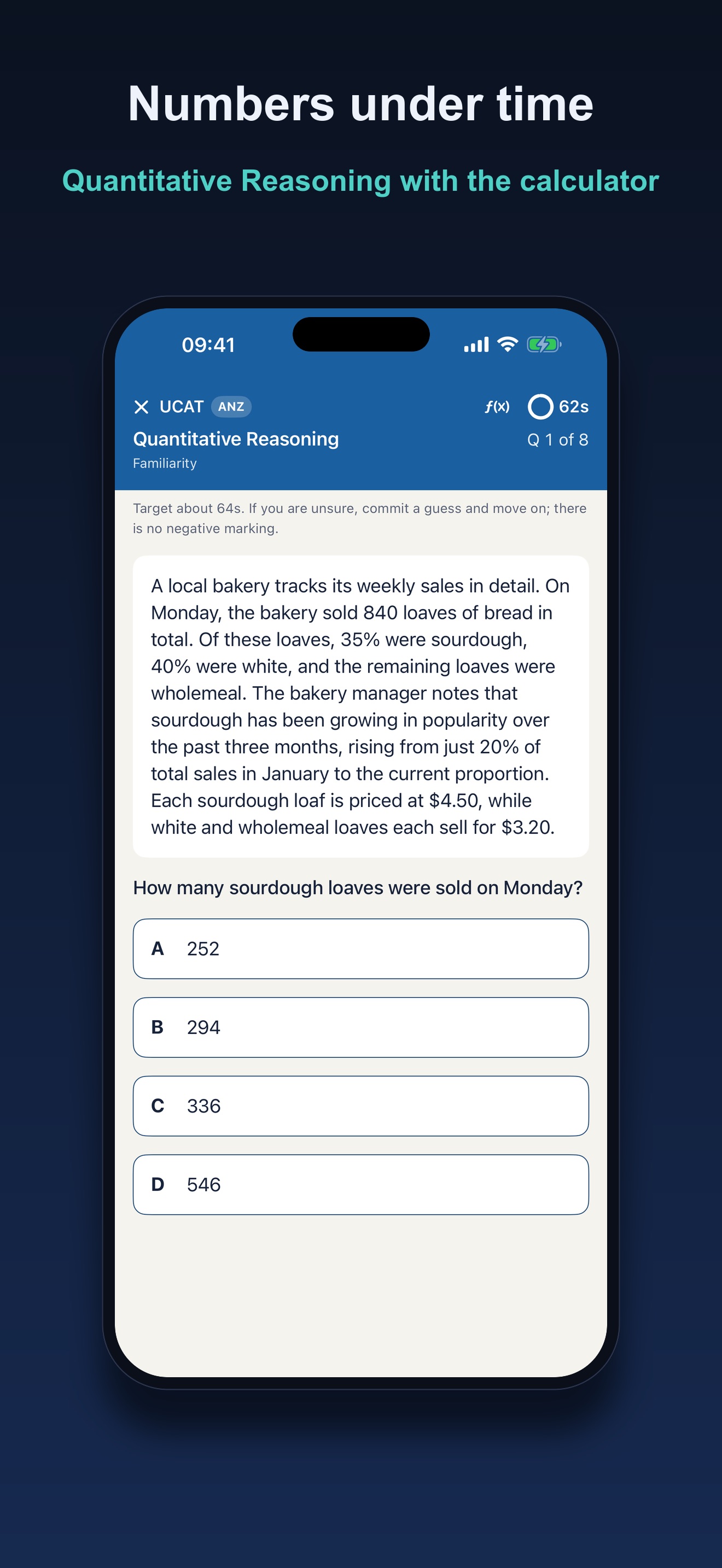
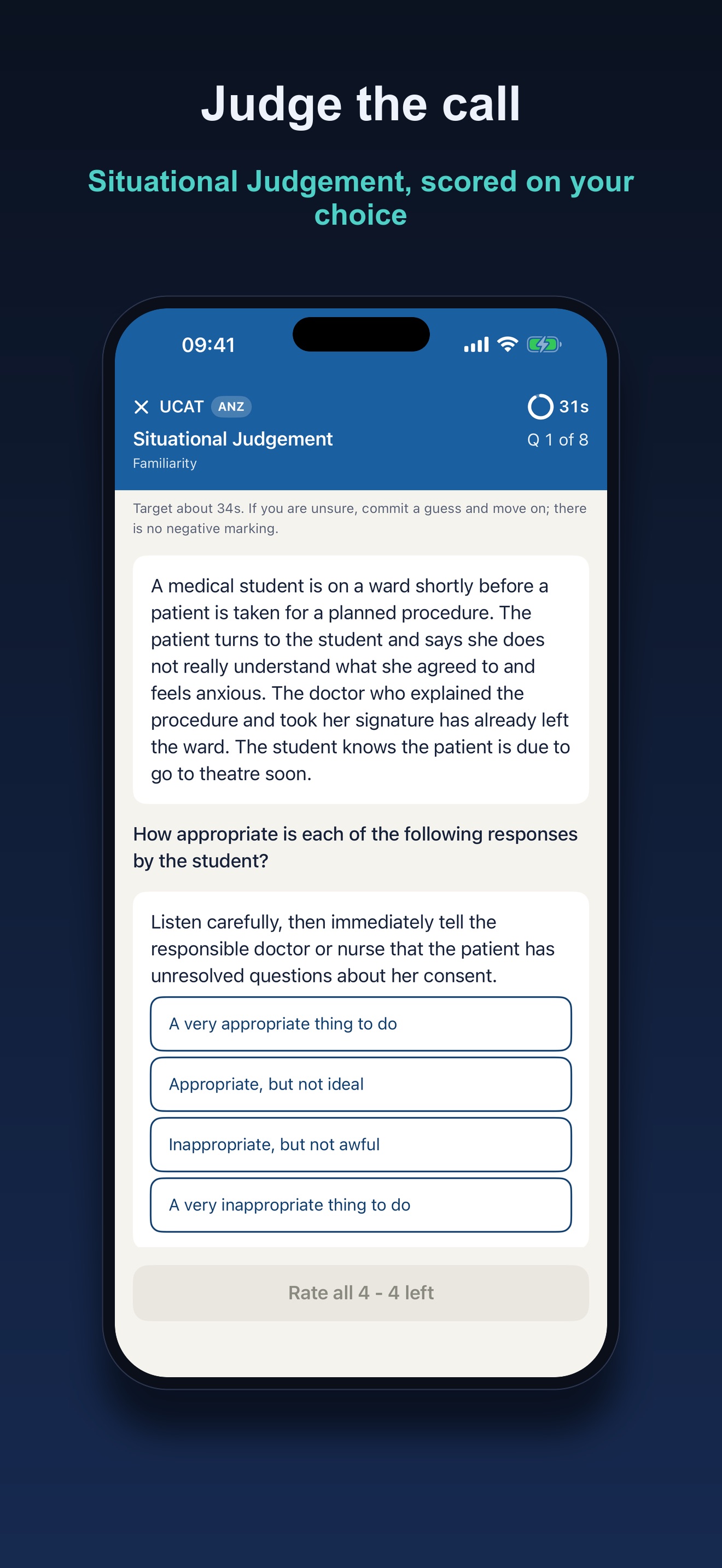
Kairos covers all four UCAT sections: Verbal Reasoning, Decision Making, Quantitative Reasoning, and Situational Judgement. Sprint mocks and full mock exams run in real exam order, with a live per-section timer, flag-and-review, and an on-screen calculator for the sections that need one. It is built for UK and ANZ candidates sitting the UCAT or UCAT ANZ.
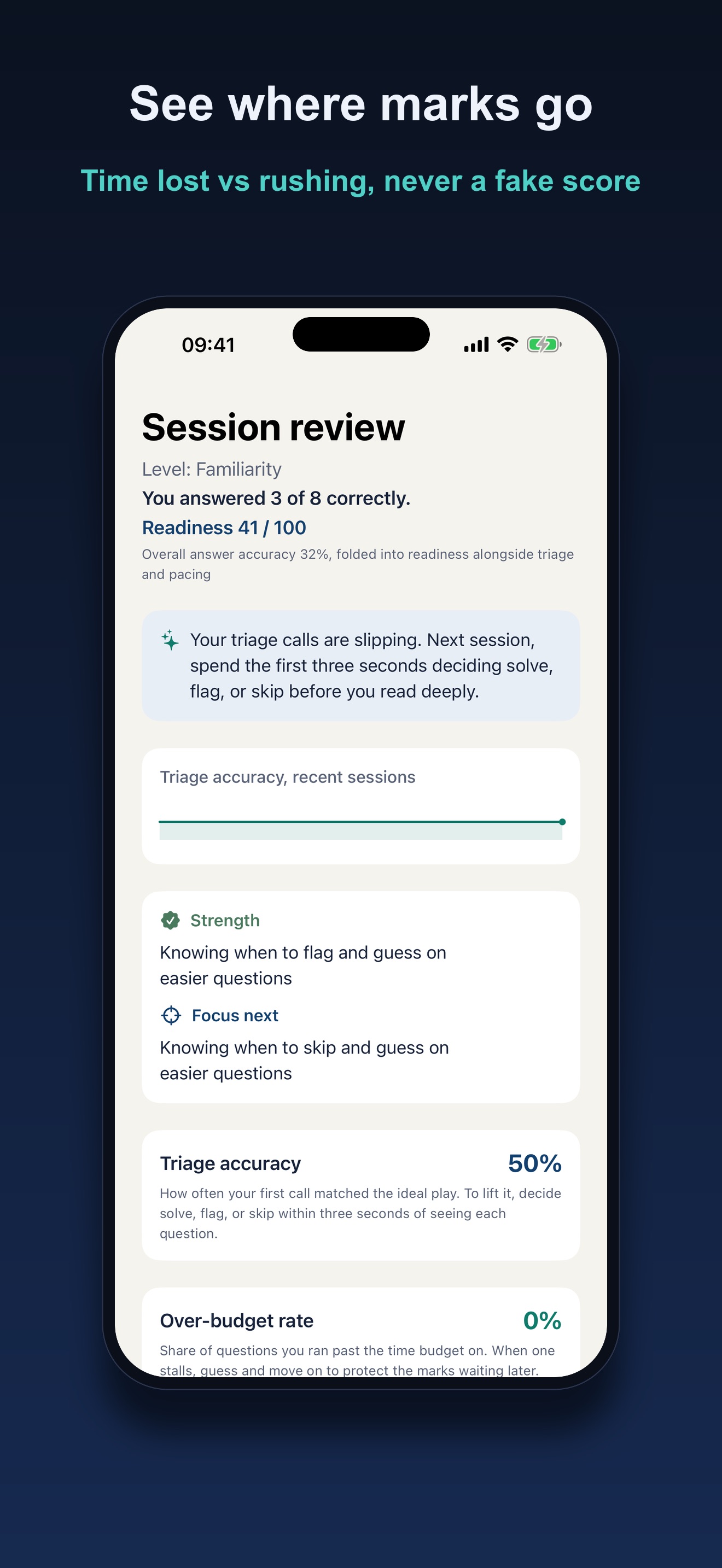
The design principle is honesty over reassurance. Kairos does not generate a predicted score, and it does not pad its question count to look bigger than it is. A post-exam report shows where marks were lost to time versus rushing, how accuracy held up as the paper went on, and one clear next action, not a vague number.
Key features
Each feature addresses a concrete gap in how UCAT pace is usually left untrained, not tracked for its own sake.
All four UCAT sections: Verbal Reasoning, Decision Making, Quantitative Reasoning, and Situational Judgement. Each section has a free taster before anything requires Premium.
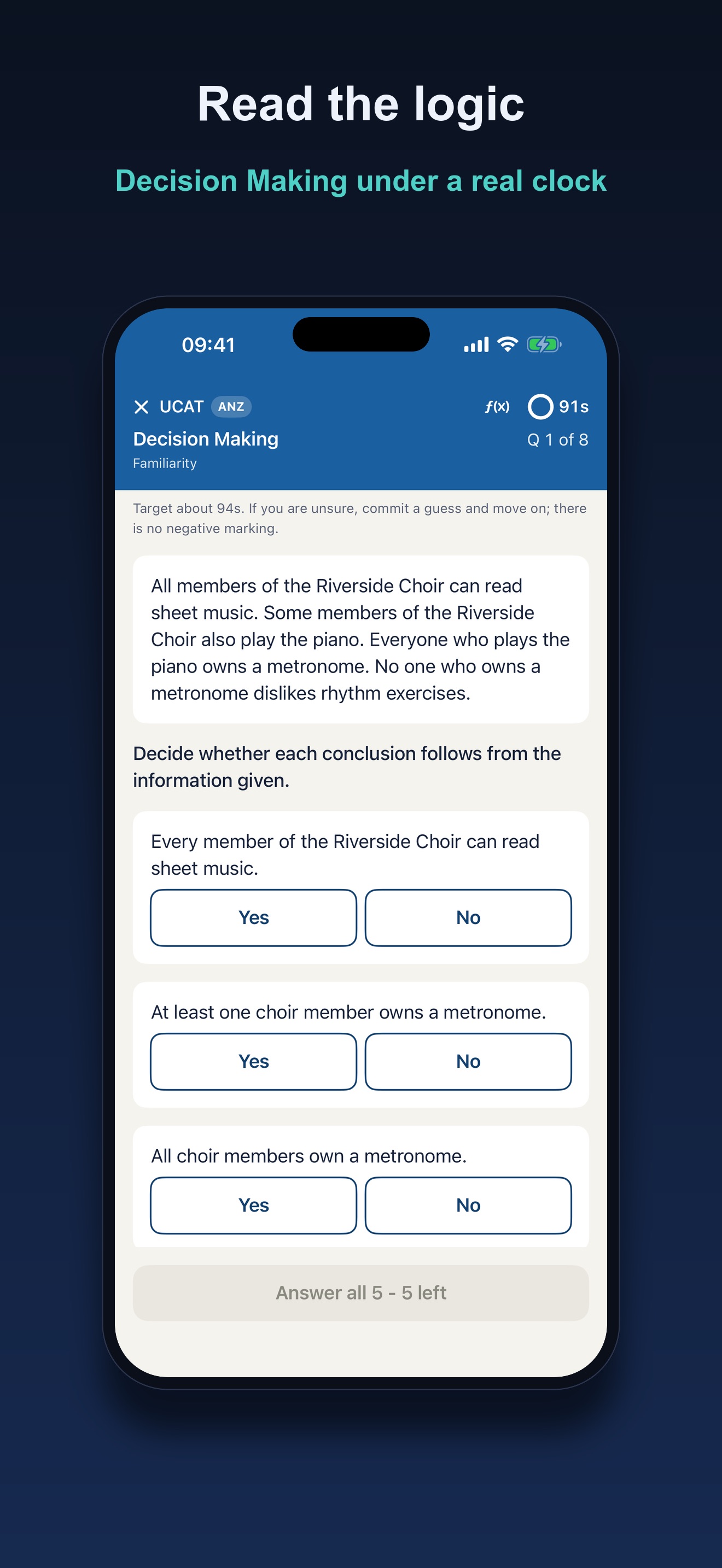
Timed mocks run in real exam order with a live per-section timer, flag-and-review, and an on-screen calculator for Decision Making and Quantitative Reasoning. The first sprint mock is free.
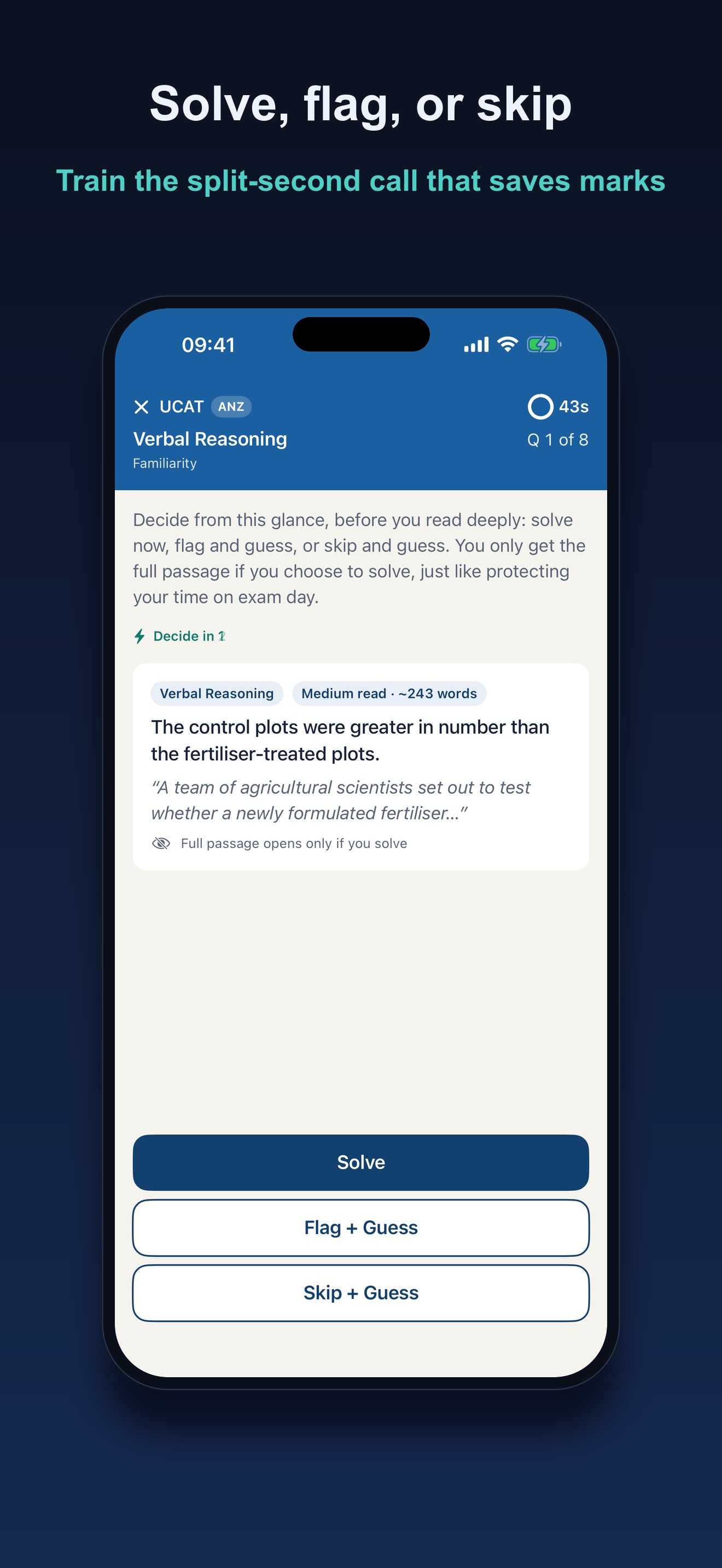
Every question records what happened: solved, flagged, or skipped, how long it took, and whether the answer looks like a guess made under time pressure.
A report after every mock shows marks lost to time against marks lost to rushing, a pacing curve across the paper, and one clear next action, not a predicted score.
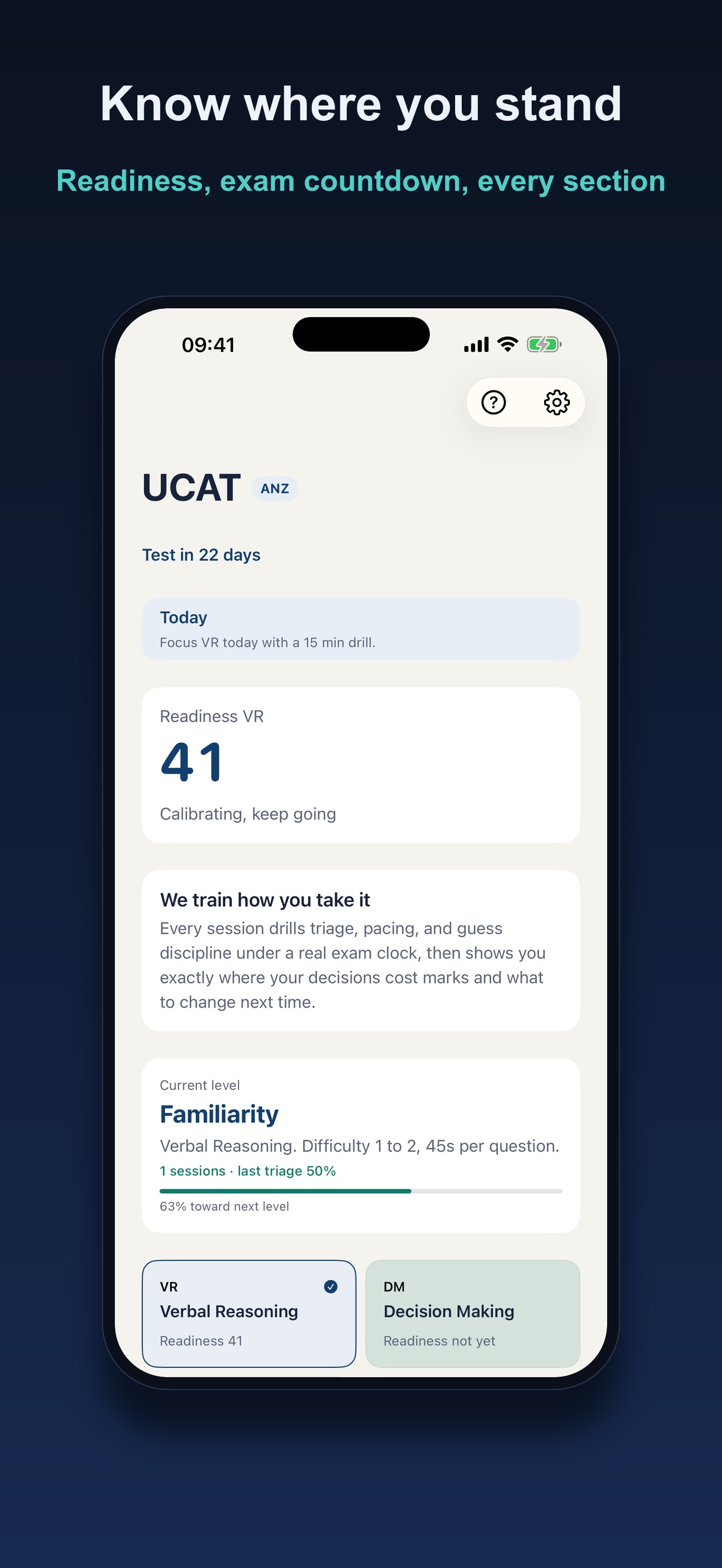
Readiness updates after every session and stays honest about where a candidate actually stands, instead of an inflated number meant to feel reassuring.
Short daily drills target the section and skill costing the most marks right now, so practice time goes where it earns the most improvement.
Under the hood
Every question in a Kairos mock is timed individually, not just the section as a whole. Each answer is logged as solved, flagged for review, or skipped, and the time spent on it is recorded against that specific item, not just a section average. An answer submitted with almost no time left is treated differently from one submitted with time to spare, which is how the app builds a picture of guess discipline rather than only correctness.
Sprint mocks and full mocks run in real UCAT exam order: Verbal Reasoning, Decision Making, Quantitative Reasoning, Situational Judgement, each with its own live countdown, flag-and-review, and, for Decision Making and Quantitative Reasoning, an on-screen calculator. Because timing is captured per question across an entire paper, Kairos can plot how accuracy and pace change from the first item to the last, which is where fatigue actually shows up.
The post-exam report and the readiness signal are built from that same data: marks lost to time versus marks lost to rushing, a pacing curve across the paper, and a next action instead of a single predicted score. Readiness recalculates after every mock rather than sitting fixed from onboarding, so it moves as practice actually changes. Daily drills pull from the same history to target whichever section and skill currently costs the most marks. Practice history, drill and mock results, the readiness signal, and exam date settings are stored locally on the device and sync across a candidate's own Apple devices through their private iCloud when enabled.
Privacy by design
No account required
Kairos can be used without creating an account and without handing over a name or an email address.
Practice data stays on the device
Practice history, drill and mock results, readiness, and exam date are stored locally, and sync only across a candidate's own Apple devices through their private iCloud when enabled.
Diagnostics only, and anonymous
Firebase Analytics and Crashlytics show which features get used and help fix crashes. The data is aggregated and is not used to identify anyone.
No ads, no trackers, no data sales
No advertising SDKs, no cross-app tracking, and no selling or sharing of data with data brokers.
Purchases handled by Apple
Subscriptions and the Lifetime purchase go through the App Store using StoreKit. Card details are never seen or stored by Kairos.
How it looks
A look at readiness, triage, and each UCAT section inside Kairos.
Scroll to browse →
Download
Kairos is live on the App Store for iPhone, free to start with a taster in every section and a free first sprint mock. Email contact@mightys.dev with feedback or a question about your UCAT sitting.